
Your Child Isn’t Going Backwards. They’re Growing Through Grief Again.
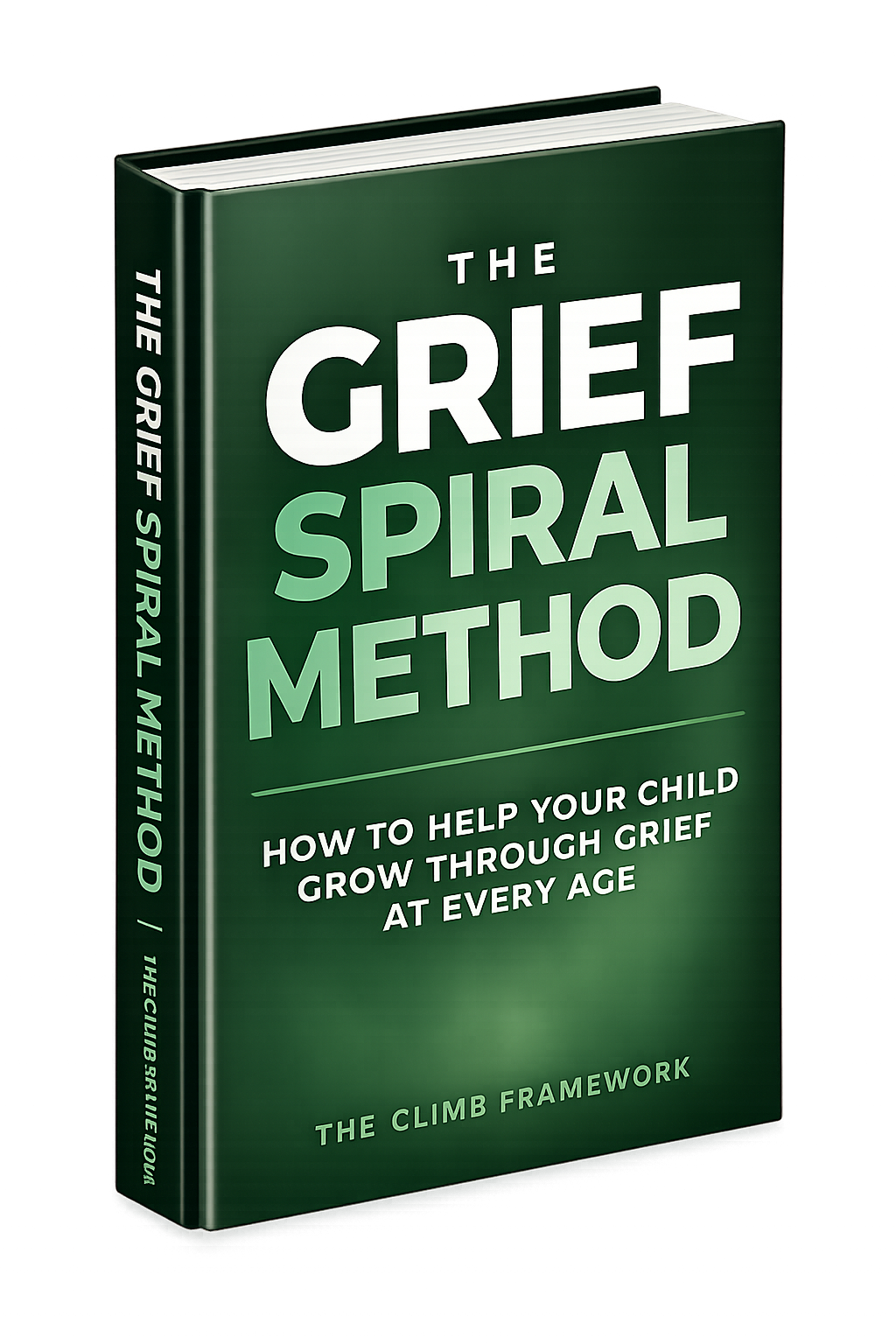
The Grief Spiral Method eBook helps you support a grieving child through every age, every return, and every new layer of understanding.
Because just when you thought they were doing better, it came back. The tears. The questions. The anger. The fear. And now you’re wondering if you missed something, did something wrong, or if you’re back at the beginning again.
What if your child’s grief returning isn’t a setback, but a sign they’re growing?
Children do not grieve once. They grieve in layers. A child may understand a loss one way at five, then completely differently at seven, ten, and again as a teenager.
Your child is not stuck. They are meeting the same loss from a higher window each time.
Children’s grief is often treated like a one-time event, but their understanding keeps growing.
Most child grief support focuses on the first wave of loss. Talk about the person. Make a memory box. Validate their feelings. Answer their questions. Those things matter, but they only address the grief your child can understand right now.
The problem is that your child is still developing. Their mind is changing, their emotional world is expanding, and their understanding of death, absence, identity, fairness, love, and permanence keeps deepening. So the grief returns at each new developmental level.
You may be experiencing this if...
The Grief Spiral Method eBook
A compassionate guide for parents and caregivers who want to support a grieving child with steadiness, honesty, and age-aware understanding.
This guide does not ask you to have perfect answers. It does not expect you to fix your child’s grief. Instead, it gives you a clear framework for recognising where your child is in the spiral — and how to meet them there.
Chart
Begin noticing your child’s grief patterns without panic. What triggers the return? What behaviours show up? What questions are they asking now?
Listen
Learn how to hear what your child is really expressing, even when they do not have the words. Children often communicate grief through behaviour before language.
Invite
Create safe, gentle openings for your child to talk, ask, remember, or feel — without pressure and without forcing emotional conversations.
Match
Meet your child at their current developmental level, not where you wish they were or where they were during the last grief wave.
Bookmark
Create emotional bookmarks your child can return to over time, such as rituals, memory prompts, questions, keepsakes, and shared language.
What You Will Discover
This is for the parent who is scared they’re getting it wrong.
It is for the parent standing in the doorway after another meltdown. The parent who wants to say the right thing but does not know what that is.
It is also for the parent who is grieving too, while trying to guide a child through something impossibly tender. You do not have to be perfect. You have to be present.
Help Your Child Grow Through Grief
Begin supporting your child with calm, clarity, and compassion through every stage of their grief spiral.
Frequently Asked Questions
Does grief returning mean my child is going backwards?
No. Children often revisit grief as their understanding grows. A new grief wave can mean they are now old enough to understand something they could not fully process before.
What if my child shows grief through anger or behaviour?
That is common. Children often express grief through behaviour before they can express it through language. The Listen step helps you look beneath the behaviour and respond to the grief underneath.
Is this the same as the audio program?
No. The audio helps you understand why your child’s grief keeps returning. The eBook gives you structure, language, and a practical framework you can revisit whenever your child’s grief changes shape again.
Do I need to have perfect answers?
No. Your child does not need perfect answers. They need your steady presence, honest language, and repeated reassurance that their grief is safe to bring back to you.
Is this therapy?
No. This is not a replacement for professional grief counselling, therapy, or medical care. If you are concerned about your child’s emotional wellbeing, please seek support from a qualified professional.
Your child is not broken. You are not failing.
This is not the beginning again. It is another turn of the spiral. Meet them there. Hold the light. And help them climb.