
Your Body Isn’t Breaking Down. It’s Speaking.
The Sorrow-to-Signal Method eBook helps you understand the physical symptoms of grief — and begin reading your body as a guide instead of fearing it as the problem.
Grief does not only live in your thoughts. Sometimes it speaks through the body: the tight chest, headaches, heavy limbs, stomach knots, exhaustion, and pain that seems to move without explanation.
What if your symptoms are not proof that your body is failing… but proof that your grief has been stored somewhere deeper?
The sensations are real. The tightness is real. The fatigue is real. And when no one gives you a clear explanation, your mind can start filling the silence with fear.
Your body is not the enemy. Your body has been trying to help you survive.
The Grief-Body Disconnect happens when your body carries what your mind has not had space to process.
Your mind may be trying to cope, function, carry on, and stay strong. But your body may be carrying grief through muscle tension, breath, posture, sleep, digestion, pain, and nervous system overload.
Not because your body is betraying you, but because your body is trying to communicate what has not yet been fully heard.
You may be experiencing this if...
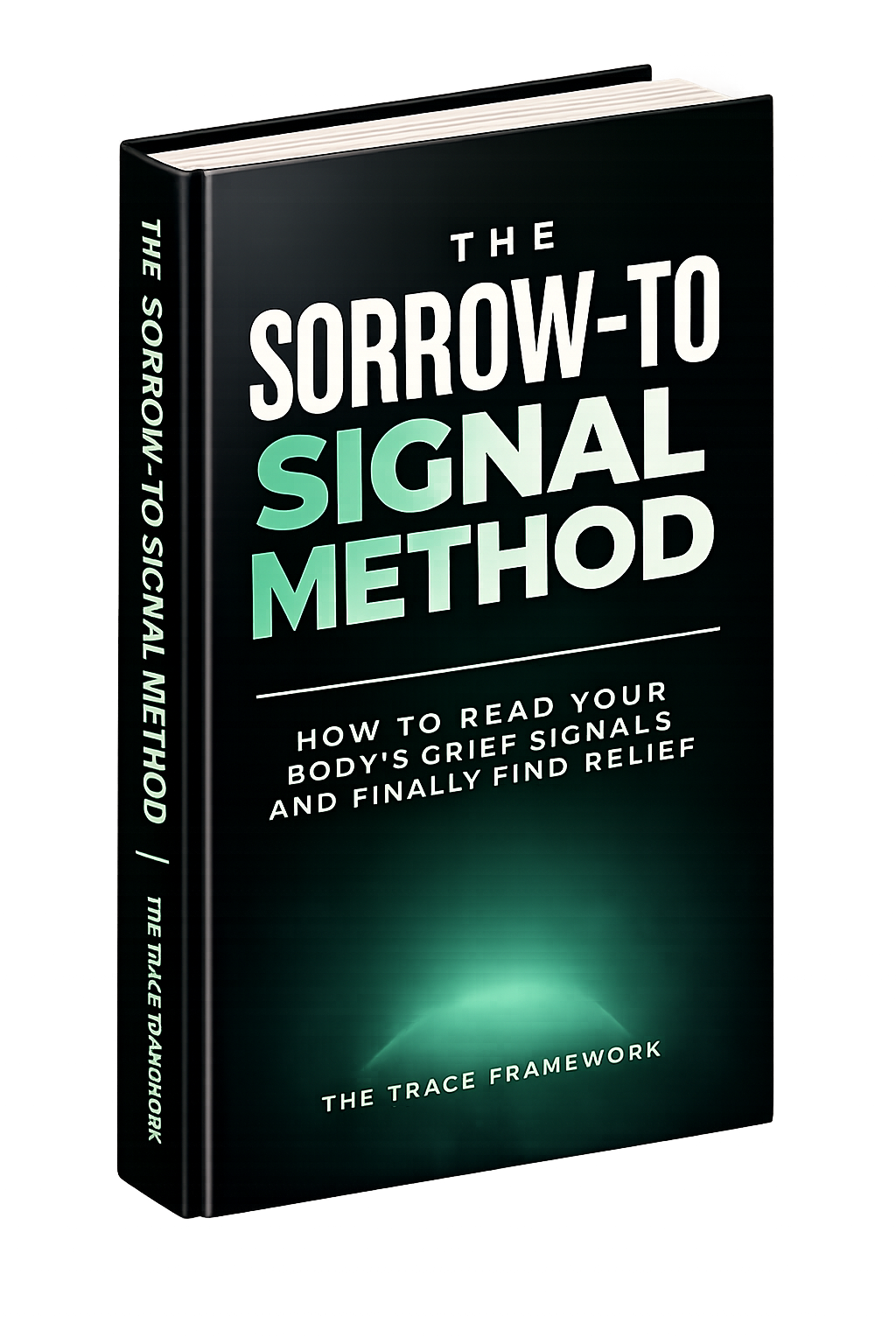
The Sorrow-to-Signal Method eBook
A compassionate, structured guide that helps you begin translating the physical language of grief.
This is not a replacement for medical care. It is not about dismissing symptoms. And it is not about forcing emotional release. It is about learning how to listen to your body with more clarity, less fear, and a deeper sense of partnership.
Track
Begin noticing the patterns: when symptoms appear, what emotions came before, and what memories, places, dates, or conversations may be connected.
Reconnect
Build a gentler relationship with the part of your body that is speaking, so you can listen instead of judging, fearing, or pushing it away.
Activate
Use gentle body-based practices like movement, breath, grounding, and bilateral stimulation to support nervous system processing.
Channel
Give stored emotion a safe direction through writing, sound, tears, walking, stretching, shaking, movement, or rest.
Evolve
Create a daily practice of listening before the signals become overwhelming, so your body becomes a partner in healing.
What You Will Discover
This is for the person whose grief has become physical.
It is for the person who feels tightness in the chest when a memory appears. The person whose body seems exhausted, tense, heavy, or unsettled.
Your body is not weak. Your body is not failing you. Your body may simply be carrying grief that has not yet found another way to speak.
Learn To Read Your Body’s Grief Signals
Begin understanding the physical language of grief with a structured, compassionate method for listening, releasing, and finding relief.
Frequently Asked Questions
Is this a replacement for medical care?
No. This guide is not a substitute for professional medical advice, diagnosis, or treatment. If you are experiencing physical symptoms, you should always consult a qualified healthcare provider.
Does this mean every physical symptom is caused by grief?
No. Physical symptoms can have many causes. This guide helps you explore the emotional and grief-related signals your body may be carrying while still respecting the importance of medical care.
Is this the same as the audio program?
No. The audio helps you understand why your body feels so affected by grief. The eBook gives you structure, language, reflection prompts, and practical exercises to help you respond.
What if I am scared of what my body is doing?
That fear is exactly why this method focuses on tracking, reconnecting, and listening. The goal is to move from panic to curiosity, so your body feels less like an enemy and more like a messenger.
Is this therapy?
No. This is not a replacement for professional grief counselling, therapy, medical care, or crisis support. It is a practical grief support guide that can sit alongside other forms of care.
Your body is not the problem.
It is the messenger. And once you learn how to listen, the symptoms that once felt frightening can become signals. The signals can become guidance. And the guidance can lead you toward relief.