
When Someone Shared Your Everyday World, Their Absence Can Be Felt Everywhere.
Sometimes grief is not only about missing the person you love. It is also about learning how to live in a world that no longer looks or feels the same without them.
Learning To Live With The Empty Space is a gentle, practical guide created for the experience of rebuilding everyday life after losing someone who was woven into your routines, decisions, home, companionship and sense of who you were together.
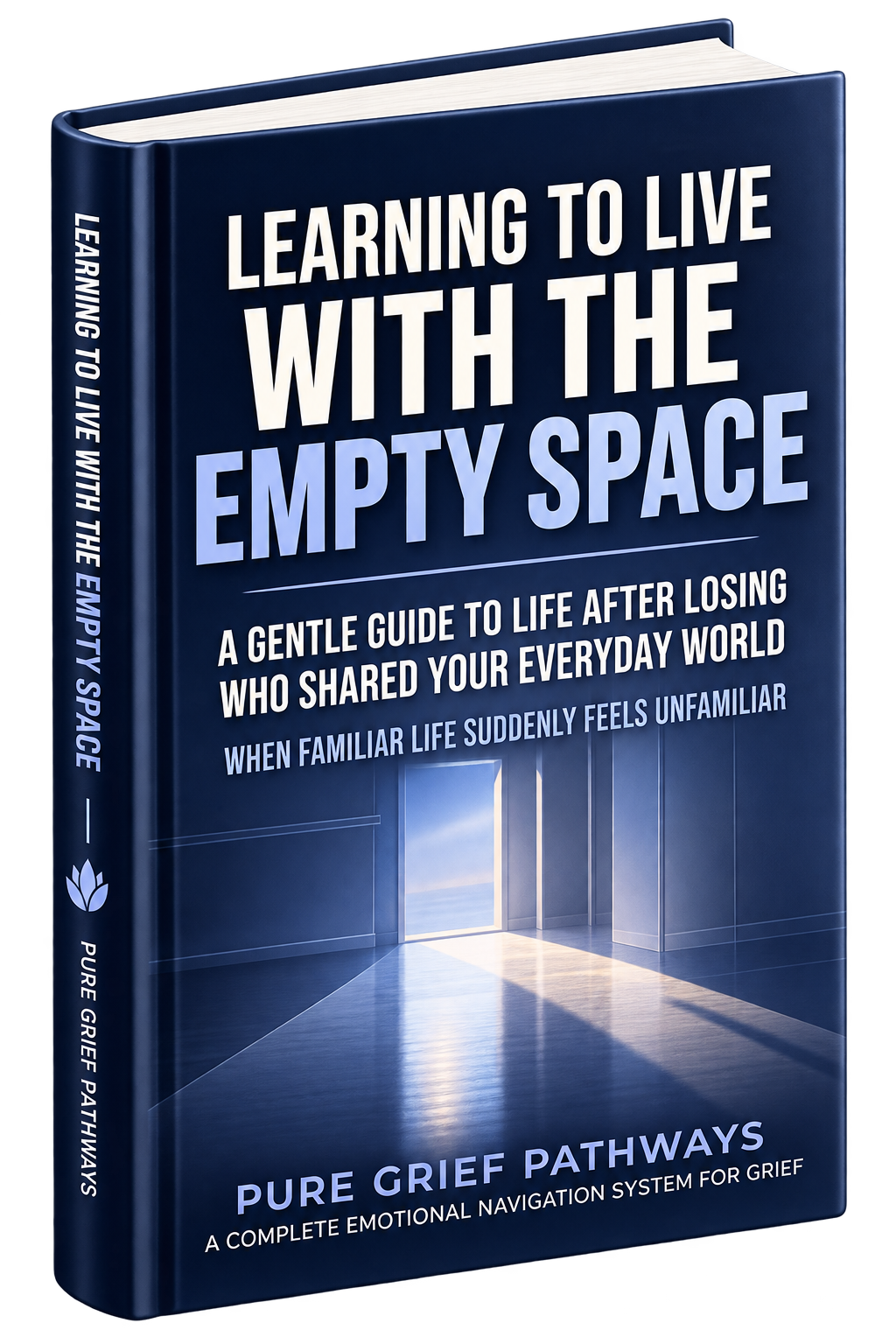
You May Be Grieving More Than Their Physical Presence.
When someone has been woven into your everyday life, their absence can appear almost everywhere.
The empty side of the bed. The unused chair. The silence when you enter the house. Cooking for one instead of two. Reaching for your phone before remembering. Going somewhere you always went together. Having news and instinctively wanting to tell them.
You may be missing far more than one person standing beside you. You may also be missing the conversations, habits, decisions, companionship, routines and small rituals that quietly formed the structure of your everyday world.
The empty space is not only where they used to sit. It can exist in your routines, your decisions, your home, your identity and the shape of your day.
Learning to live with that space does not mean learning to care less. It means gradually discovering how life can hold both their absence and your continuing presence.
Loss Can Change The Architecture Of Your Day.
Even when everything around you looks physically the same, the structure of everyday life may feel completely different.
The evenings, mornings or weekends suddenly feel much longer or emptier.
Decisions that were once shared now belong entirely to you.
Tasks they always handled now feel unfamiliar or overwhelming.
The home feels different even though everything is still in the same place.
You may feel lonely while also finding social situations exhausting.
You may find yourself wondering who you are now that there is no longer a physical “we” in the same way.
Seven Gentle Ways To Begin Living Around The Empty Space.
These ideas are not about replacing the person you love or forcing yourself to create a completely new life. They are about gradually creating enough support, structure and connection around what has changed.
Identify The Space
Turn one enormous feeling of emptiness into smaller, more identifiable experiences by noticing exactly where their absence feels strongest.
Do Not Try To Replace Them
Understand that new routines, relationships or experiences do not need to occupy the place that belonged to the person you lost.
Give Difficult Hours Structure
Choose one difficult part of the day and gently give it a little more shape, rather than trying to redesign your entire life.
Do Not Let One Moment Predict Everything
A lonely evening is real. But it does not have to become evidence that every future evening will feel the same.
Let Identity Change Slowly
You do not need to reinvent yourself or immediately know who you are becoming. Identity can evolve gradually.
Learn One Thing At A Time
Give yourself permission to be a beginner with practical responsibilities that may never previously have belonged to you.
Allow Connection
Being with other people does not reduce what the person you lost meant to you. Connection is not betrayal.
Building Something New Is Not The Same As Replacing Someone.
Some gaps are not meant to be filled. A person who mattered deeply is not interchangeable, and the relationship you shared had its own history, language, memories and meaning.
A new routine does not replace the old routine. A new friendship does not replace the person who died. Learning to do something they once handled does not mean you no longer need or miss them.
You are not replacing your old life. You are gradually learning how to live within a changed one.A Gentle Guide For The Parts Of Everyday Life That Now Feel Different.
You do not need to solve everything at once. Keep this guide somewhere accessible and return to the sections that feel most relevant whenever you need them.
You Do Not Have To Rebuild Your Entire Life At Once.
Start with one part of one day. One practical responsibility. One difficult hour. One small point of connection. One gentle adjustment at a time.
Download Learning To Live With The Empty Space Free PDF • No registration required • Yours to keepExplore The Solo Architecture Method.
This free guide introduces some of the supportive principles behind The Solo Architecture Method, part of the Pure Grief Pathways support library.
The complete program is designed around the experience of rebuilding everyday life when someone who shared your routines, decisions, responsibilities and sense of identity is no longer physically beside you.
It is not about replacing the person you lost. It is not about forcing independence. And it is not about creating a completely new identity as quickly as possible.
Instead, it provides a structured pathway for gradually rebuilding the practical and emotional architecture around your life while still carrying the relationship that mattered.
There is absolutely no requirement to continue. The free guide is yours whether you choose to explore anything further or not.
Explore The Solo Architecture MethodYou Can Build A Life That Still Has Room For Them.
There may always be moments when you notice their absence. A chair. A song. A quiet evening. A familiar place. Something you wish you could tell them.
But gradually, other things can begin to exist alongside that absence too.
A routine you created. A decision you made. Something you learned. A conversation you enjoyed. A moment that surprised you by feeling peaceful.
None of these things erase what came before.
Your life does not have to become a replacement for the life you shared. It can become an extension of it — different, changed, but still containing the love, memories and influence of the person who helped shape it.
Pure Grief Pathways
A Complete Emotional Navigation System for Grief