
If The First Year Has Passed But Your Grief Hasn't, You Are Not Going Backwards.
The first anniversary has passed. Other people may expect things to be getting easier. And yet your loss may suddenly feel deeper, quieter or more real.
When The Second Year Feels Harder Than Expected is a gentle, practical guide created to help you understand why grief can sometimes change after the first anniversary — and why greater intensity does not mean you have failed to heal.
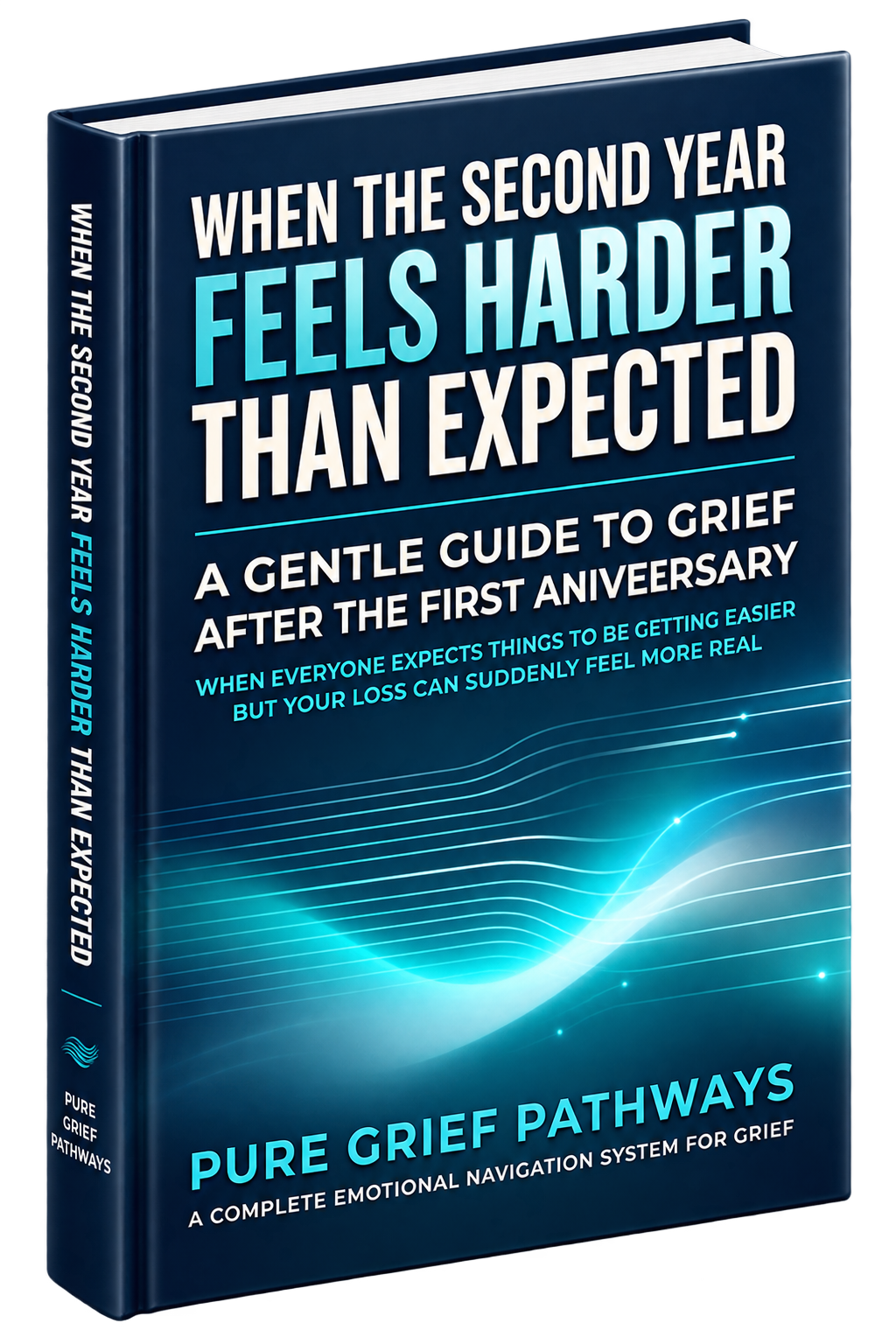
When The Second Year Feels Different.
There is something about the first year after a loss that people seem to understand.
The first birthday. The first Christmas. The first anniversary. The first time certain places, traditions and dates arrive without the person you love.
People may check in. They may remember important dates. There can still be an understanding that your grief is relatively new.
And then the first anniversary passes.
For some people, the second year doesn't feel easier. It feels more real.
The world may begin treating your loss as though it has moved further into the past, while you are becoming more aware of how permanently it has changed the present.
If this stage feels unexpectedly difficult, it does not mean you are going backwards.
Why Can The Second Year Feel So Different?
The grief itself may not simply be repeating. You may be experiencing the loss from a different place.
The practical momentum of the first year may have become quieter.
The permanence of the loss may begin to feel more emotionally real.
Other people may check in less often or expect you to be “better” by now.
You may begin discovering more of what the loss actually contained.
Future plans, routines, roles and shared responsibilities may feel different now.
Questions about identity and who you are becoming may begin to feel louder.
Seven Gentle Ways To Understand The Second Year Of Grief.
This guide is not suggesting that the second year should be harder. It is about helping you recognise some of the experiences that can emerge after the first anniversary without treating them as failure.
Understand The Change In Momentum
The first year can contain practical movement and survival. The second year may feel quieter around the grief.
Recognise The Permanence
Knowing intellectually that someone has died and emotionally absorbing what that means are not always the same thing.
Separate Their Timeline From Yours
Other people's adjustment to your loss is not the measurement of your own healing.
Notice The New Layers Of Loss
Over time you may discover more of the routines, roles, plans and shared future that were also lost.
Protect Connection
Long-term grief can become less visible even when you still need understanding and a safe place to be honest.
Redefine A Difficult Day
A wave of grief does not erase the movement, capacity or healing that came before it.
Measure Capacity, Not Absence
Progress may be less about feeling less grief and more about how much life you are gradually able to hold alongside it.
You Are Not Starting Again.
A difficult day does not erase your progress. A painful anniversary does not return you to the beginning. A sudden wave of grief does not mean everything you have built has disappeared.
You have lived through every day that brought you here. You have already carried things you once thought impossible to carry.
The second year is another part of the journey — not proof that you have failed.A Gentle Guide For When The World Has Moved On Faster Than Your Grief.
Return to this resource whenever the second year feels unexpectedly intense, the support around you becomes quieter or the loss suddenly feels more permanent.
There Is No Finish Line You Have Failed To Reach.
The first year has passed. That does not mean your grief should have ended with it.
You are allowed to meet this next part of the journey at your own pace.
Download When The Second Year Feels Harder Than Expected Free PDF • No registration required • Yours to keepExplore The Depth Signal Method.
This free guide introduces some of the supportive principles behind The Depth Signal Method, part of the Pure Grief Pathways support library.
The complete program was created specifically for the experience that can emerge after the first year — when the world may expect grief to be getting easier while the reality of the loss can begin to feel deeper, quieter and more permanent.
It is not about telling you that the second year should be harder. It is not about creating another grief timeline. And it is not about suggesting that everyone experiences this stage in the same way.
Instead, The Depth Signal Method provides a structured pathway for understanding why grief can change after the first anniversary, recognising the deeper layers of loss that may begin to emerge, and navigating this stage without treating its intensity as failure.
There is absolutely no requirement to continue. The free guide is yours whether you choose to explore anything further or not.
Explore The Depth Signal MethodYou Do Not Have To Finish Grieving In Order To Continue Living.
There may still be difficult anniversaries. Unexpected waves. Lonely evenings. Moments when you desperately wish life could return to what it was.
But there may also be moments you could not imagine during the earliest days.
A genuine laugh. A peaceful memory. A new routine. An unexpected connection. An hour when grief is not the first thing in your mind.
None of these moments betray the person you lost. And none of the difficult moments cancel them.
Perhaps progress is not asking: “How little grief do I feel?”
Perhaps it is asking: How much life am I gradually becoming able to hold alongside my grief?
Pure Grief Pathways
A Complete Emotional Navigation System for Grief