
When Someone Else's Grief Makes You Question Your Own, You Do Not Have To Measure Yourself Against Them.
They seem stronger. More emotional. More social. More private. Further along. Or perhaps simply different.
Why Your Grief Doesn't Look Like Anyone Else's is a gentle, practical guide created to help you step away from comparison, stop judging the way you are grieving and begin understanding the unique pattern of your own experience.
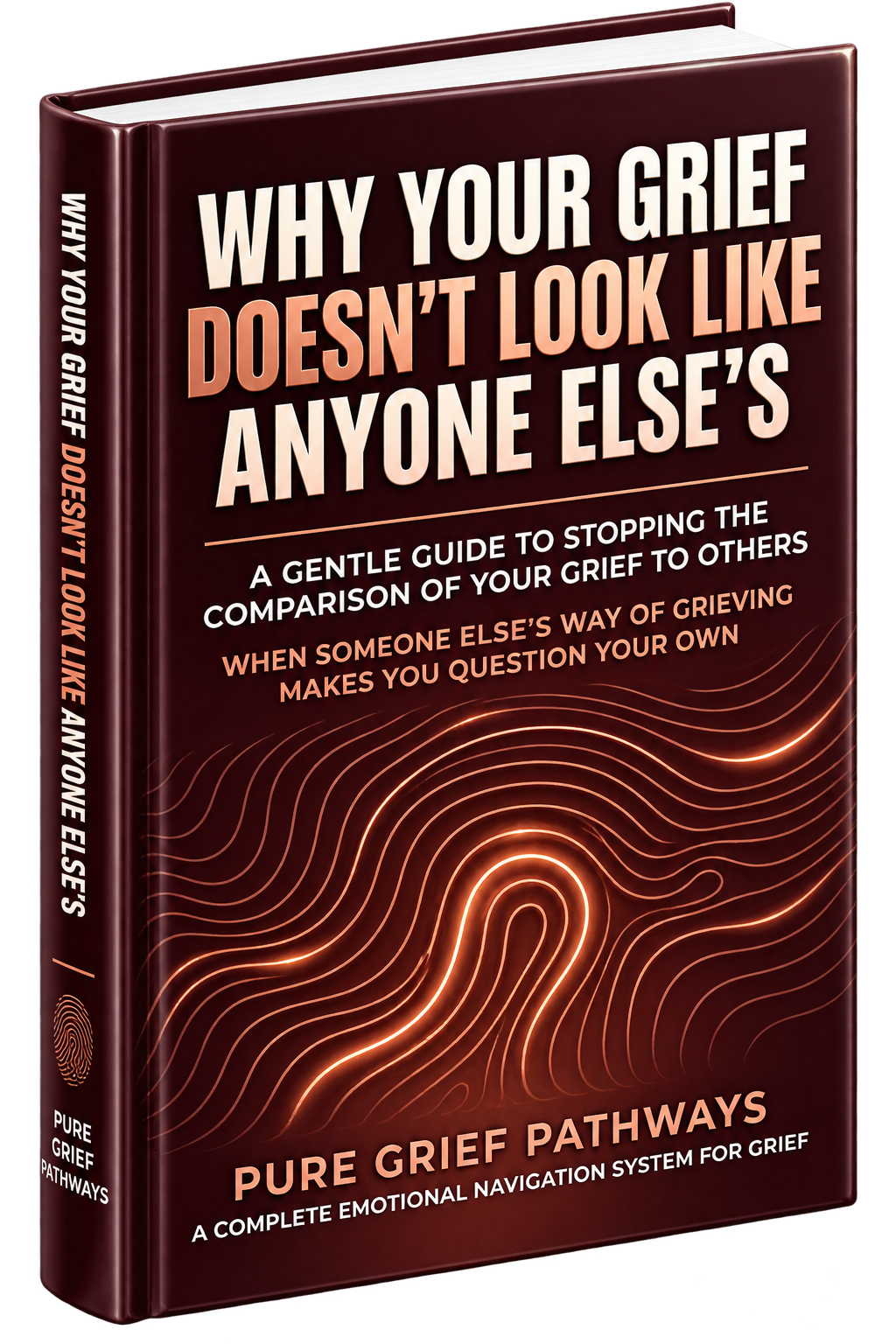
Your Grief Is Allowed To Look Like Yours.
Grief becomes harder when you are carrying two burdens at the same time: the loss itself and the fear that you are grieving it incorrectly.
You may look at someone else who has experienced a similar loss and wonder why they seem more composed. More emotional. More social. More private. More able to talk. Or more ready to make changes.
Then the comparison begins.
Your grief does not need to resemble anybody else's in order to be real.
Grief is not a standard response to a standard event. It is the response of one particular person to one particular relationship within one particular life.
Your history matters. Your personality matters. The nature of the relationship matters. The circumstances of the death matter. Your responsibilities, support system, health, beliefs and previous experiences all matter.
That combination belongs only to you.
When Difference Starts Feeling Like Evidence Against You.
The problem is not that you notice differences. The problem begins when difference becomes judgement.
They returned to work quickly, so perhaps you think you should be functioning better.
They cry every day, so perhaps your numbness makes you question how deeply you loved.
They kept every belonging while you needed to change the room.
They started going out again while you still avoid social situations.
Their timeline may begin to feel like a standard you are supposed to meet.
Their visible strength may make your private struggles feel like failure.
Seven Gentle Ways To Stop Comparing Your Grief To Someone Else's.
This guide is not about teaching you a new correct way to grieve. It is about helping you understand the griever you already are.
Remember The Relationship Was Unique
You are not grieving a category of person. You are grieving one specific person and the relationship you had with them.
Allow Your Emotions To Look Different
Sadness, anger, numbness, relief, anxiety, guilt, exhaustion and even moments of enjoyment can all exist within grief.
Stop Using The Calendar As A Scorecard
Time passed does not tell you where you should be or what you should be ready for.
Make Room For Family Differences
Two people can love the same person deeply and still need completely different things while grieving.
Be Careful What You Compare
Someone else's public moment is not the same thing as their entire private experience.
Notice Your Own Grief Pattern
Become curious about when your grief becomes louder, what helps and what your own contradictions may be telling you.
Release The Word “Should”
Notice when comparison has turned into a borrowed rule and ask whether that expectation actually fits your grief.
Someone Else's Grief Is Information About Them — Not An Instruction For You.
Their tears do not invalidate your numbness. Their strength does not expose your weakness. Their new relationship does not mean you are stuck.
Your good day does not mean you have forgotten. Your difficult day does not mean you have failed.
Two people can experience loss differently and both experiences can be real.A Gentle Guide For The Moments When Comparison Makes You Doubt Yourself.
Return to this resource whenever somebody else's grief, timeline, emotions or choices begin making you question your own.
You Do Not Have To Prove Your Grief.
You do not need to perform grief convincingly for anyone. You do not need to reach somebody else's milestones. And you do not have to make your grief look normal to somebody else.
Your experience is valid without comparison.
Download Why Your Grief Doesn't Look Like Anyone Else's Free PDF • No registration required • Yours to keepExplore The Grief Fingerprint Method.
This free guide introduces some of the supportive principles behind The Grief Fingerprint Method, part of the Pure Grief Pathways support library.
The complete program was created for people who repeatedly find themselves wondering whether they are grieving correctly, whether they should be further along or why their experience looks so different from somebody else's.
It is not about giving you a new standard to follow. It is not about putting grief into stages. And it is not about telling you what your emotions should look like.
Instead, The Grief Fingerprint Method provides a structured pathway for recognising your actual patterns, releasing comparison-based expectations and building greater trust in the way your own grief is unfolding.
There is absolutely no requirement to continue. The free guide is yours whether you choose to explore anything further or not.
Explore The Grief Fingerprint MethodYour Grief Does Not Have To Look Normal To Anyone Else In Order To Be Real.
There may still be moments when somebody else's grief makes you question your own.
Comparison is a deeply human habit, especially when we are uncertain and looking for reassurance.
But you can learn to notice comparison without allowing it to become a verdict.
Their tears do not invalidate your numbness. Their strength does not expose your weakness. Their choices do not create a timetable for yours.
What you need today may not be what you need next month. Your grief fingerprint is not a fixed identity. It is the evolving pattern of how this loss is being carried through your life.
Perhaps the gentler question is not: “How normal does my grief look?”
Perhaps it is: Am I becoming better able to carry what is true for me?
Pure Grief Pathways
A Complete Emotional Navigation System for Grief