
When Part Of You Is Trying To Be Present Today, While Another Part Is Already Afraid Of Tomorrow.
You can sit beside them. Talk with them. Hold their hand. Hear their voice. And still feel grief beginning somewhere inside you.
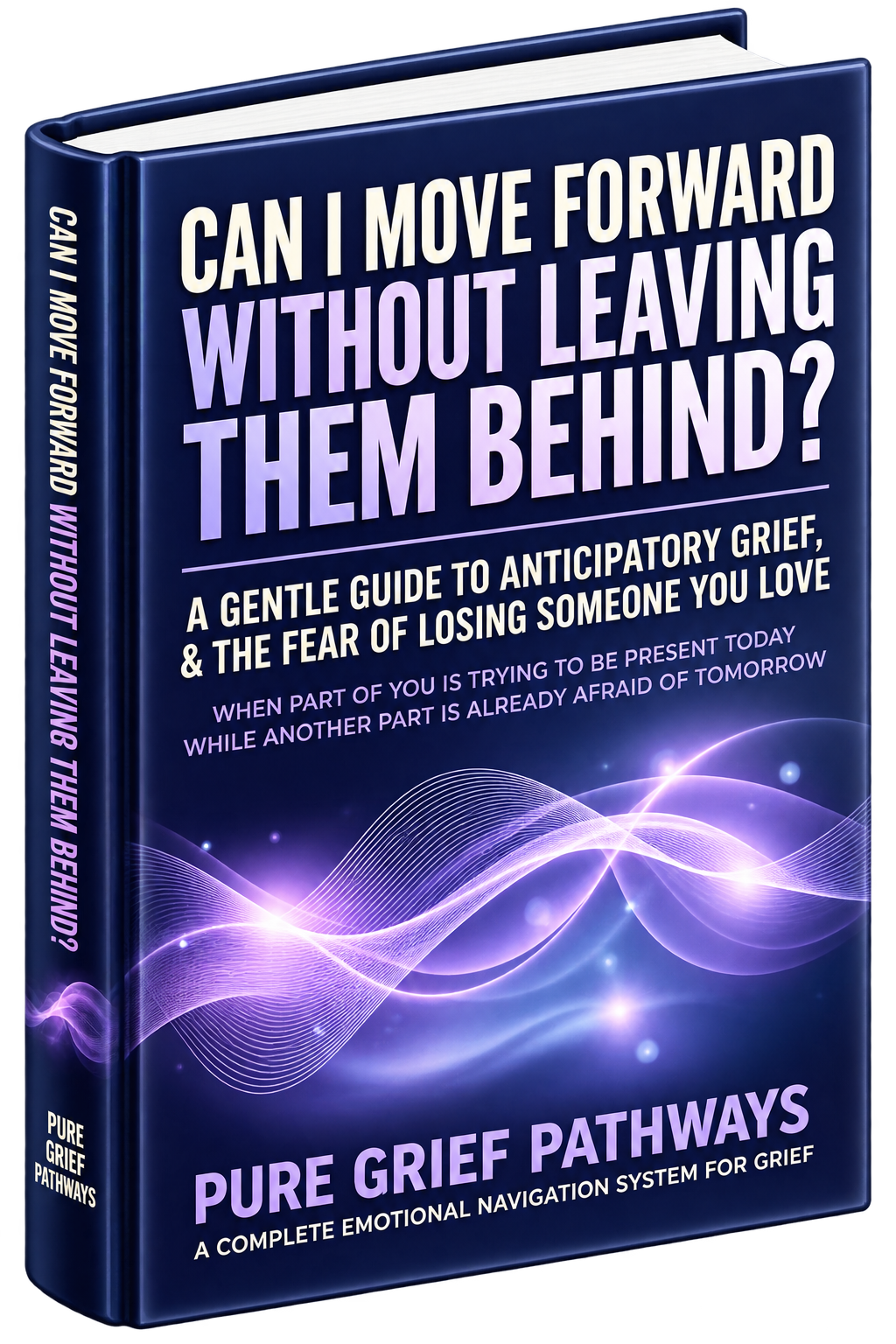
Can I Move Forward Without Leaving Them Behind? is a gentle guide to anticipatory grief — the emotional strain of loving someone who is still here while living with illness, uncertainty, caregiving responsibility and the fear of losing them.
You Can Grieve Someone Who Is Still Here.
There is a particular kind of grief that can begin before someone has died.
It can appear when someone you love becomes seriously ill, when their independence begins to change or when the future you once assumed you would share suddenly feels uncertain.
You may still be able to speak with them, sit beside them and share ordinary moments.
And yet somewhere inside you, grief may already have begun.
Feeling grief before a loss does not mean you have stopped hoping.
Anticipatory grief is not the same as giving up. It is the emotional response to living with uncertainty, change and the awareness that someone precious to you may not always be here.
Hope and grief can exist in the same heart.
You May Be Carrying More Than Anyone Else Can See.
Anticipatory grief can create an emotional workload that continues even when nothing practical is happening.
You notice every change in their breathing, energy, appetite, movement or expression.
Even peaceful moments can feel unsafe because part of your mind remains on alert.
Your mind repeatedly travels forward to the possibility you are most afraid of.
You feel guilty whenever you need rest, space or a few hours of ordinary life.
You may feel pressure to remain positive even while privately feeling frightened.
The caregiving role can begin consuming the relationship you are trying so hard to protect.
Seven Gentle Ways To Stay Connected To Today While Tomorrow Is Still Unknown.
The goal is not to remove uncertainty. It is to help uncertainty take up less of the relationship you still have today.
Recognise Anticipatory Grief
Understand that grieving what may happen does not mean you have stopped hoping or loving.
Step Back From Constant Vigilance
Caring deeply does not require your nervous system to remain emotionally on guard every second.
Return From Tomorrow To Today
Notice when fear is asking you to live inside an imagined future before it has arrived.
Allow Hope And Reality To Coexist
You can hope for more time while also acknowledging that you are frightened.
Rest Without Calling It Abandonment
Your need for sleep, space, help or ordinary life does not mean you care any less.
Let Ordinary Moments Count
Not every conversation needs to become profound. Sometimes tea, television, silence or a familiar joke is enough.
Protect The Relationship Inside The Care
Where possible, remember that you are still their partner, child, sibling, friend or loved one — not only their caregiver.
Moving Forward Does Not Mean Moving Away.
Moving forward during anticipatory grief does not mean emotionally leaving someone.
It can mean eating when you are anxious. Sleeping when you can. Accepting help. Looking after your own health. Continuing relationships. Allowing occasional enjoyment.
None of those things mean you are preparing to abandon the person you love.
You do not leave someone behind by allowing yourself to remain alive inside your own life.A Gentle Resource For When Fear Starts Taking You Away From The Moment You Still Have.
Return to this guide whenever uncertainty, caregiving responsibility or fear begins pulling your attention too far into what might happen next.
You Do Not Have To Carry The Whole Future In This Moment.
Tomorrow may contain uncertainty. But today still contains something real.
Their voice. Their presence. A conversation. A familiar moment. Something that can still be shared.
Download Can I Move Forward Without Leaving Them Behind? Free PDF • No registration required • Yours to keepExplore The Presence Bridge Method.
This free guide introduces some of the supportive principles behind The Presence Bridge Method, part of the Pure Grief Pathways support library.
The complete program was created for the difficult emotional space where anticipatory grief, caregiving exhaustion, vigilance and uncertainty begin interfering with your ability to experience the relationship that still exists.
It is not about asking you to stop thinking about what may happen. It is not about pretending difficult possibilities do not exist. And it is not about trying to make you comfortable with the idea of loss.
Instead, The Presence Bridge Method helps you build a more compassionate relationship with uncertainty.
It explores how to remain emotionally connected without living permanently on alert, how to acknowledge fear without allowing fear to consume the present, and how to care for yourself without interpreting your own needs as abandonment.
The aim is to help you remain connected to today while tomorrow is still unknown.
There is absolutely no requirement to continue. The free guide is yours whether you choose to explore anything further or not.
Explore The Presence Bridge MethodYou Do Not Have To Emotionally Experience Every Possible Tomorrow Today.
The future may contain difficult decisions. There may be uncertainty you cannot resolve. There may be questions no one can answer for you yet.
But fear does not have to occupy every part of the relationship you still have.
Sometimes the gentler question is: Who are they to me today?
What can still be shared? What can still be said? What still feels recognisable between you?
Sometimes that may be conversation. Sometimes humour. Sometimes touch. Sometimes companionship. Sometimes simply sitting beside one another.
Changed does not automatically mean absent.
Fear may say: “One day they may not be here.”
Presence can answer: “But they are part of this moment now.”
Pure Grief Pathways
A Complete Emotional Navigation System for Grief