
When Grief Begins To Affect Your Body, Understanding What You Are Feeling Can Make It Less Frightening.
Grief is often described as an emotional experience. But sometimes it can also be felt through the body.
When Grief Affects Your Body is a gentle, practical guide created to help you understand some of the physical experiences that can accompany bereavement — while also helping you recognise when a symptom should not simply be dismissed as “just grief.”
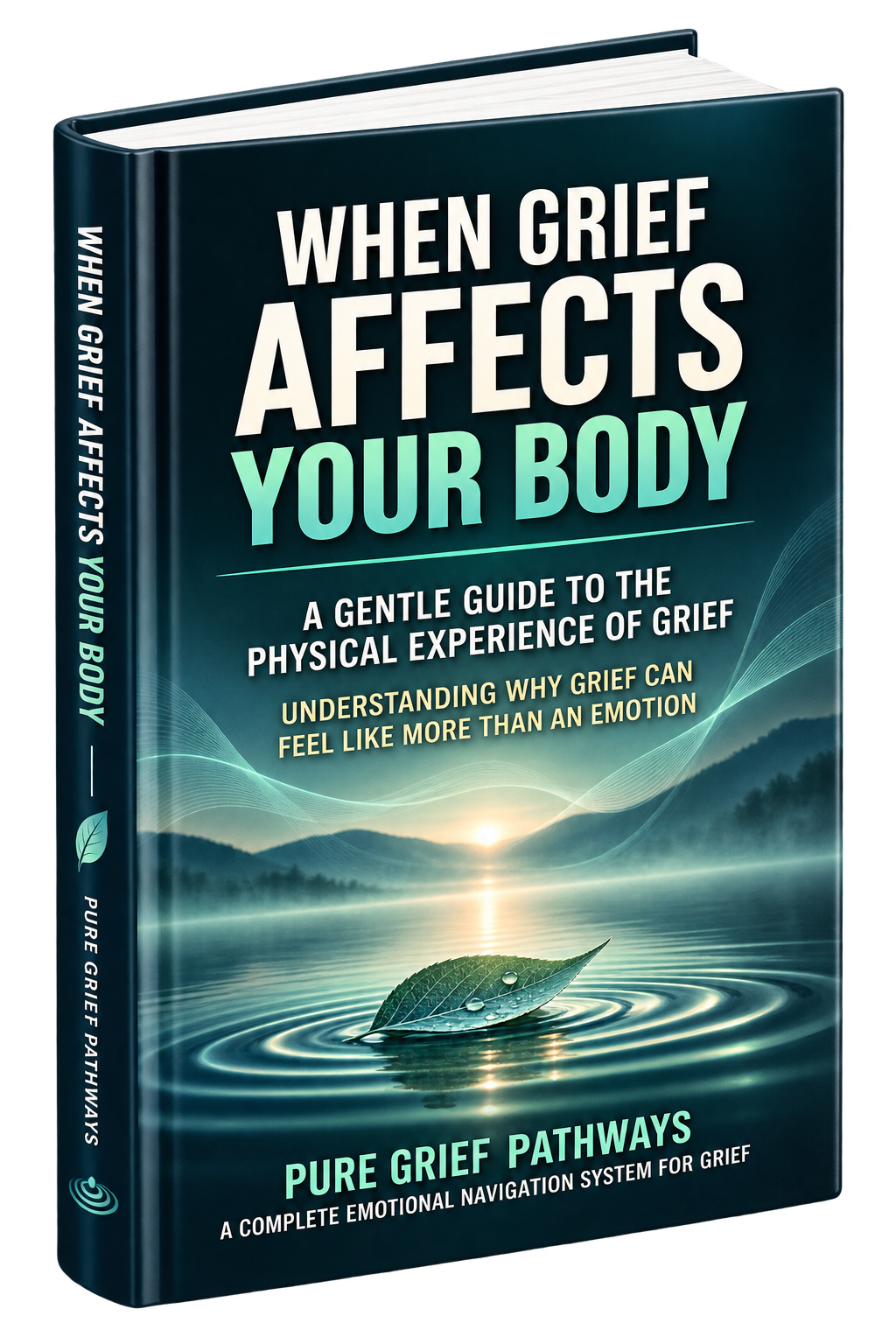
Your Body Can Be Part Of The Grieving Experience Too.
When we talk about grief, we naturally talk about emotions. Sadness. Longing. Anger. Loneliness. Confusion.
But sometimes grief can also be experienced physically.
You may feel unusually exhausted even after doing very little. Your sleep may change. Your appetite may become unpredictable. Your muscles may feel tense. Your stomach may feel unsettled. You may notice headaches, aches, heaviness or other unfamiliar sensations.
And when your body suddenly feels different, another worry can appear: What is happening to me?
Grief can involve the whole person — emotionally and physically. Understanding that relationship can help you respond with greater awareness instead of immediately fighting or fearing every sensation.
That does not mean every physical symptom is caused by grief, and it certainly does not mean symptoms should be ignored. This guide is designed to help you become more aware of what you are experiencing while continuing to treat your physical health with the care it deserves.
Physical Grief Does Not Always Look The Same.
There is no single physical response to bereavement. Some people notice very little physically while others become acutely aware of changes in their body.
Fatigue or exhaustion. You may feel unusually depleted even when you have done very little.
Changes in sleep. Falling asleep, staying asleep or sleeping much more than usual may become noticeable.
Changes in appetite or digestion. Food may feel less appealing, appetite may fluctuate or digestion may feel different.
Muscle tension, aches or headaches. Stress and disrupted routines can sometimes leave the body feeling tense or uncomfortable.
Restlessness. You may find it difficult to sit still or feel physically settled.
Chest or throat sensations. Some grieving people describe heaviness or tightness, but new or concerning symptoms should never automatically be assumed to be grief.
Five Gentle Ways To Respond When Grief Begins To Feel Physical.
These ideas are not about diagnosing your body or explaining every sensation as grief. They are about noticing what you are experiencing, supporting yourself gently and knowing when professional medical advice may be appropriate.
Notice The Signal
Move from “What is wrong with me?” towards “What am I actually noticing?” before deciding what the sensation means.
Check The Basics
Consider simple physical needs such as water, food, rest, gentle movement, fresh air and existing healthcare needs.
Soften The Tension
Notice your shoulders, jaw, hands and breathing and allow your body to soften by one small degree rather than forcing yourself to relax.
Look For Patterns
Notice when sensations appear, what may make them stronger and what seems to help — without turning self-awareness into another responsibility.
Know When To Seek Help
Understanding physical grief should never mean ignoring new, severe, persistent, worsening or concerning symptoms.
Not Every Physical Symptom Should Be Called “Just Grief.”
Grief can be accompanied by physical experiences. But a symptom appearing while you are grieving does not automatically mean that grief caused it.
If a symptom is new and concerning, severe, persistent, getting worse, significantly affecting your ability to function, or simply makes you feel that something is not right, seek appropriate medical advice.
Severe or unexplained chest pain, significant difficulty breathing, fainting or other symptoms that cause immediate concern may require urgent medical attention.
You do not have to choose between “I am grieving” and “I want to get this checked.” Both can be true.A Gentle Reference For The Days When Your Body Feels Different.
You do not need to memorise everything in this guide. Keep it somewhere accessible and return whenever you want to better understand what your body may be experiencing.
Your Body Is Carrying You Through Something Enormous Too.
If your body feels different while you are grieving, begin with curiosity rather than judgement. Notice. Listen. Support the basics. Allow rest. And seek professional advice whenever something concerns you.
Download When Grief Affects Your Body Free PDF • No registration required • Yours to keepExplore The Sorrow To Signal Program.
This free guide introduces some of the supportive principles behind The Sorrow To Signal Program, part of the Pure Grief Pathways support library.
The complete program goes deeper into the relationship between grief, stress, bodily awareness and the signals your body may be giving you during bereavement.
It is designed to help you develop a calmer, more structured way of responding to those experiences without asking you to ignore symptoms or suggesting that every physical sensation is caused by grief.
There is absolutely no requirement to continue. The free guide is yours whether you choose to explore anything further or not.
Explore The Sorrow To Signal ProgramWhat Would Help Your Body Feel A Little More Supported Today?
Sometimes the answer may be rest. Sometimes food. Sometimes movement. Sometimes company. Sometimes medical advice.
You do not need to force your body back to how it felt before.
For now, perhaps it is enough simply to recognise that you have been through something enormous — and that the body carrying you through it deserves care too.
Pure Grief Pathways
A Complete Emotional Navigation System for Grief