
If You Keep Wondering Whether You Should Be “Further Along” By Now, This Guide Is For You.
Time passes. Calendars turn. Anniversaries accumulate. But grief does not follow the same schedule.
There Is No Deadline For Grief is a gentle, practical guide created to help you step away from the pressure of grief timelines, comparisons and expectations — and begin measuring your experience in a more personal and compassionate way.
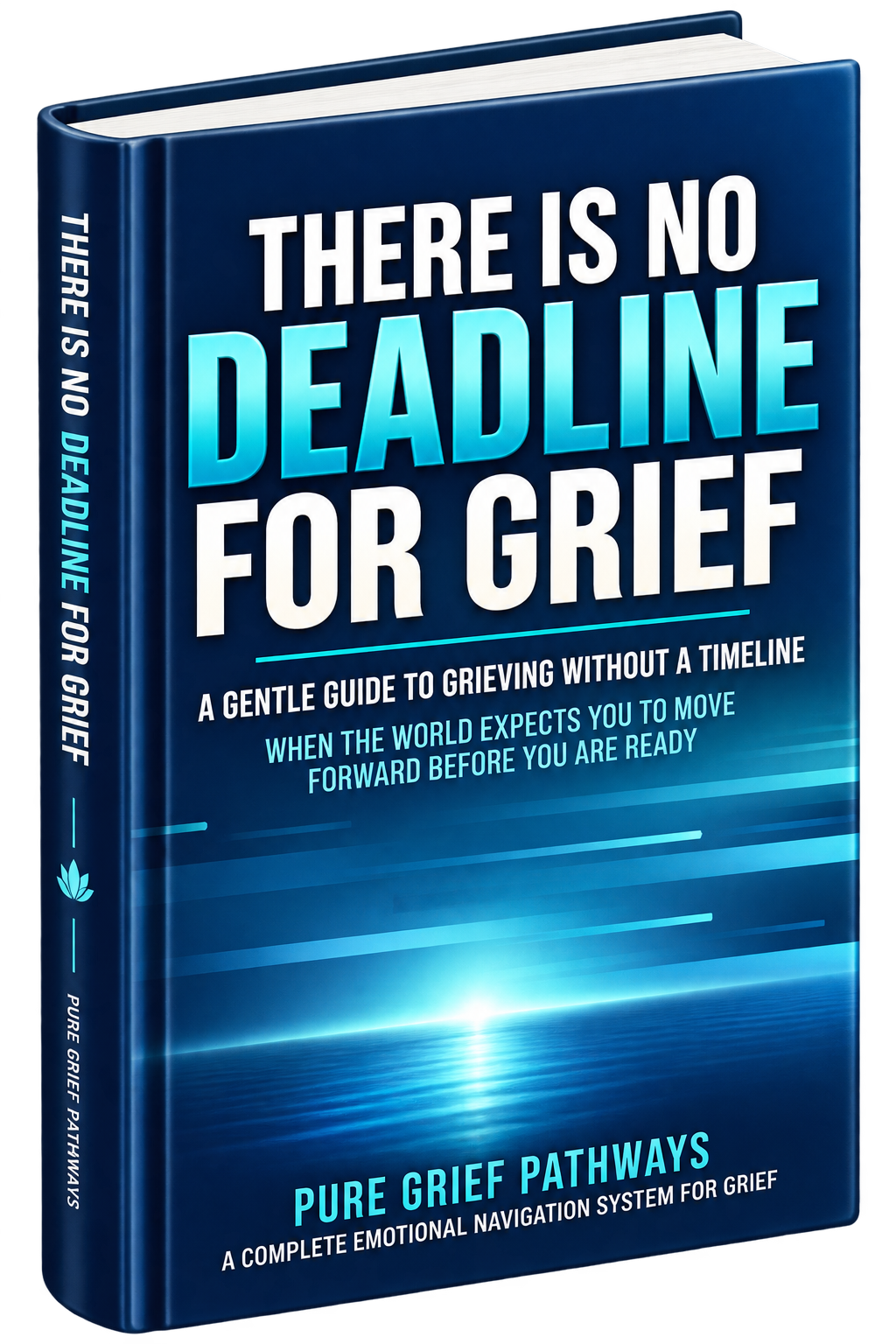
Grief Does Not Follow The Calendar.
After someone dies, people often begin counting time. Three days. Two weeks. A month. Six months. A year.
The dates accumulate whether you want them to or not. And somewhere along the way an uncomfortable expectation can begin to appear:
Shouldn't I be doing better by now?
Perhaps nobody says it directly. Perhaps someone tells you that it has been a while, or that you need to start moving forward. Maybe people ask less often how you are. Work expects normal performance again. The world appears to have resumed its ordinary rhythm.
But your grief has not consulted the calendar.
Time passing and grief disappearing are not the same thing.
You can function better and still miss someone enormously. You can laugh and still grieve. You can have manageable days followed by an unexpectedly difficult one.
Grief is not failing because it has not disappeared according to somebody else's timetable.
Where Do Grief Timelines Come From?
Few people openly give grief a deadline. But expectations can appear in much quieter ways.
Bereavement leave ends and ordinary responsibilities return.
Friends stop checking in as frequently or become uncomfortable when you mention the person who died.
Someone tells you that they would want you to be happy or that you need to move on.
You compare yourself with someone else who appears to be coping differently.
You tell yourself you should be stronger, crying less or socialising more by now.
Anniversaries and milestones begin to feel like emotional tests you are supposed to pass.
Seven Gentle Ways To Step Away From Grief Deadlines.
These ideas are not about refusing change or remaining permanently inside grief. They are about separating genuine movement from the pressure to meet somebody else's timetable.
Notice The Invisible Deadlines
Identify the expectations and “shoulds” you may be carrying and ask where those rules actually came from.
Separate Time From Progress
Remember that the calendar measures days. It does not measure the meaning of your relationship or what you are carrying now.
Redefine Progress
Progress does not have to mean missing someone less. Sometimes it means becoming more able to carry the reality that you still miss them.
Expect Grief To Change Shape
A difficult day after several manageable ones does not mean you have gone backwards or erased previous movement.
Stop Comparing Grief Clocks
Another person's timeline reflects their relationship, circumstances and experience. It cannot determine yours.
Allow “Not Yet”
You do not have to turn every future possibility into a decision today simply because somebody thinks enough time has passed.
Measure Movement Differently
Ask what has become possible, manageable or better understood rather than whether grief has disappeared.
The Calendar Measures Days. It Does Not Measure Love.
Three months. Six months. A year. The first birthday. The first Christmas. The first anniversary. The second year.
Dates are easy to measure, which can make them feel like emotional checkpoints. But the amount of time that has passed tells us very little about the relationship, the circumstances of the loss or what somebody is carrying.
Time passed is information. It is not a score.A Gentle Reset For The Pressure To Be “Further Along.”
Keep this guide somewhere accessible and return whenever the calendar, other people or your own expectations begin telling you where you think you should be.
You Do Not Have To Beat Grief To A Deadline.
You are learning to live with a loss that mattered. That process deserves more compassion than a calendar can provide.
Download There Is No Deadline For Grief Free PDF • No registration required • Yours to keepExplore The Depth Anchor Method.
This free guide introduces some of the supportive principles behind The Depth Anchor Method, part of the Pure Grief Pathways support library.
The complete program is designed to help you navigate the pressure surrounding how long grief is supposed to last and develop a more personal, compassionate way of understanding movement through bereavement.
It is not about remaining permanently inside grief. It is not about refusing change. And it is not about suggesting that time has no role in adapting to loss.
Instead, The Depth Anchor Method helps you separate external timelines from your actual emotional experience, recognise different forms of progress, navigate recurring waves of grief and develop your own internal reference point when the world seems to be telling you where you “should” be.
There is absolutely no requirement to continue. The free guide is yours whether you choose to explore anything further or not.
Explore The Depth Anchor MethodYou Are Allowed To Carry What Still Matters.
Life may change. New routines may appear. You may become more capable of doing things that once felt impossible.
And still, you may miss them.
That does not automatically mean you are stuck. It does not mean you have failed to heal. And it does not make everything you have built since their death less meaningful.
Moving forward does not require reaching a point where the person no longer matters.
Perhaps the objective was never to outrun grief, but to gradually learn how grief, memory, love and continuing life can occupy the same story.
Pure Grief Pathways
A Complete Emotional Navigation System for Grief