
When Their Belongings Feel Like More Than Things, You Do Not Have To Make Every Decision Today.
A shirt. A watch. A coffee mug. A favourite chair. After someone dies, ordinary objects can suddenly carry extraordinary meaning.
What Do I Do With Their Belongings? is a gentle, practical guide created to help you navigate the emotional decisions surrounding the things someone you love left behind — without pressure, false deadlines or the idea that there is one correct way to handle them.
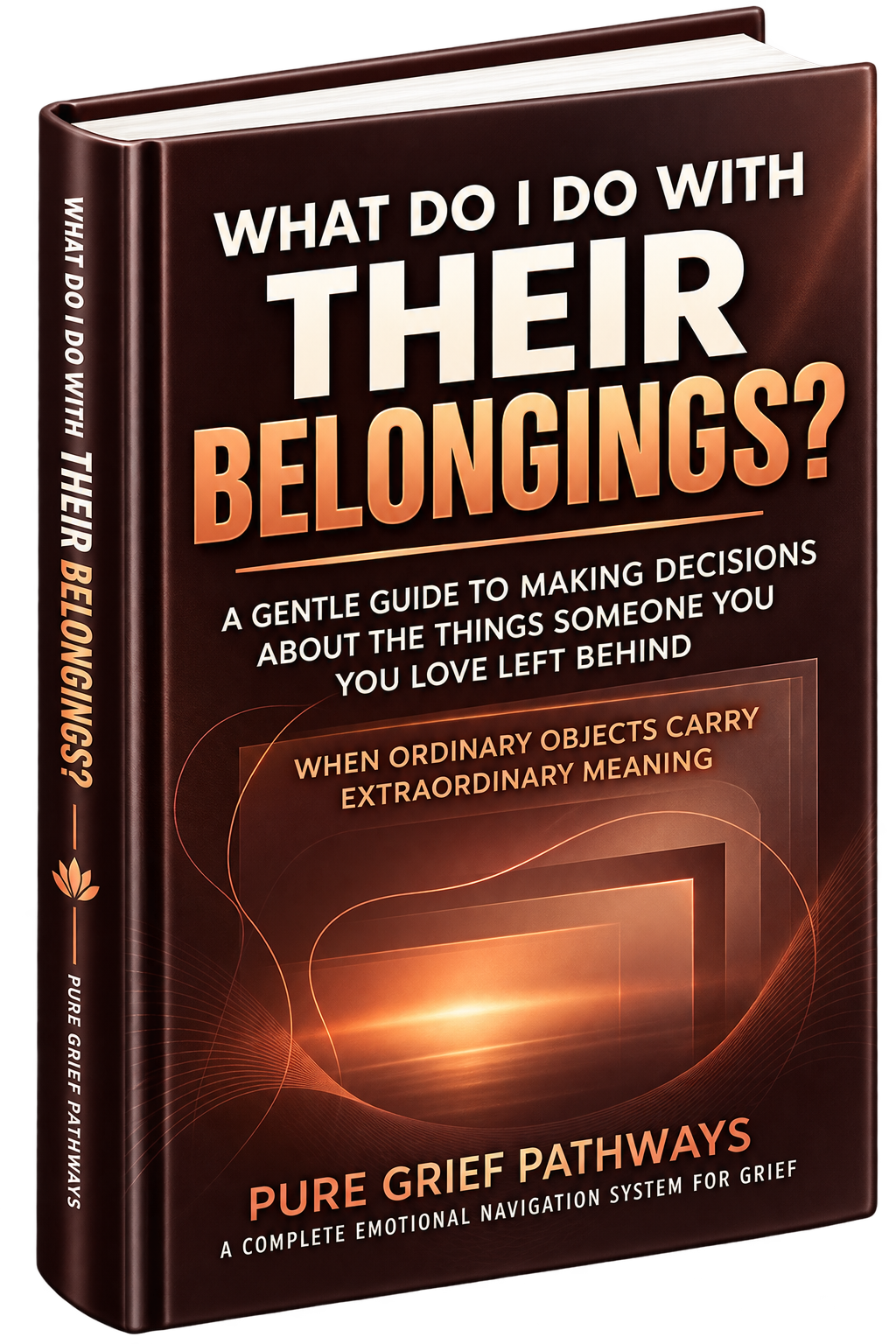
When Their Things Become More Than Things.
A shirt can be just a shirt — until it belonged to someone you love.
Then suddenly it can hold far more. Their smell. The way they looked wearing it. A holiday. A Sunday morning. A joke. A photograph. A moment you had not thought about for years.
The same can happen with almost anything: a watch, a mug, a handbag, shoes, glasses, books, tools, letters, jewellery, perfume or even a handwritten shopping list.
After someone dies, belongings can stop feeling like possessions and begin feeling like physical connections to a life you shared.
That is why decisions about belongings can become so emotionally difficult. Other people may see objects. You may see memories. Other people may see clutter. You may see evidence that this person existed in your everyday world.
Why Can Something So Practical Feel So Emotional?
The practical question may be “Do I keep this?” But emotionally, the question can feel very different.
If I give this away, am I somehow letting part of them go too?
What if I regret this decision later?
What if I forget their smell, their handwriting or the memory connected to it?
What if keeping everything means I am stuck?
What if giving things away means I am moving forward too quickly?
What happens when practical deadlines arrive before emotional readiness does?
Seven Gentle Ways To Make Decisions About The Things They Left Behind.
There is no single rule for every belonging. Different objects can carry different meanings, and different decisions may need different amounts of time.
Remove False Deadlines
Ask whether something genuinely needs deciding today. If it does not, “not yet” can be a completely valid decision.
Start With Meaning
Emotional value and financial value are not the same. Ask what an object actually holds for you.
Remember You Have Options
Keep, share, photograph, repurpose, display, store, donate, sell or let go. It does not have to be only “keep” or “lose.”
Begin With Easier Decisions
You do not have to start with the belongings carrying the greatest emotional weight.
Protect Yourself From Regret
Give irreversible decisions more space, especially when something carries significant emotional meaning.
Expect People To Feel Differently
The same object can represent very different memories to different family members.
Choose What You Carry Forward
Keeping everything is not the only way to remember someone. You can preserve meaning without preserving every possession.
Letting Go Of An Object Is Not The Same As Letting Go Of The Person.
A belonging can carry enormous meaning, but the object itself does not contain the whole relationship.
Removing a coat does not remove the memory of them wearing it. Selling a car does not erase the journeys. Donating books does not remove the conversations. Changing a room does not rewrite what happened inside it.
Objects can carry memories. But they do not contain the whole relationship.A Gentle Compass For Decisions That Can Feel Surprisingly Heavy.
You do not need to sort everything at once. Keep the guide somewhere accessible and return to the sections that feel most relevant as different decisions arise.
You Are Not Deciding What The Person Meant To You.
You are deciding what to do with the physical things they left behind. Those are not the same decision.
Download What Do I Do With Their Belongings? Free PDF • No registration required • Yours to keepExplore The Memory Keepers Compass.
This free guide introduces some of the supportive principles behind The Memory Keepers Compass, part of the Pure Grief Pathways support library.
The complete program is designed to help you navigate the emotional decisions surrounding the belongings left behind after someone important dies.
It is not about clearing everything away. It is not about keeping everything forever. And it is not about somebody else deciding when you should be ready.
Instead, The Memory Keepers Compass provides a structured pathway for understanding the emotional meaning attached to belongings, separating memory from possession, approaching difficult decisions more gradually and deciding what you genuinely want to preserve, share, transform or release.
There is absolutely no requirement to continue. The free guide is yours whether you choose to explore anything further or not.
Explore The Memory Keepers CompassTheir Life Was Always Bigger Than Their Belongings.
Some belongings may stay with you for the rest of your life. Others may eventually leave.
Neither choice determines how much you loved them.
The relationship also exists in what you learned from them, the stories you tell, the things you still say because they used to say them, the decisions they influenced, the places you remember and the ways knowing them changed you.
The objective is not to preserve every object. It is to discover which things help you carry the meaning forward.
Pure Grief Pathways
A Complete Emotional Navigation System for Grief