
You Can Keep Going On The Outside While Carrying More Than Anyone Can See.
You may still be working. Solving problems. Helping your family. Paying the bills. Making decisions. Getting through each day.
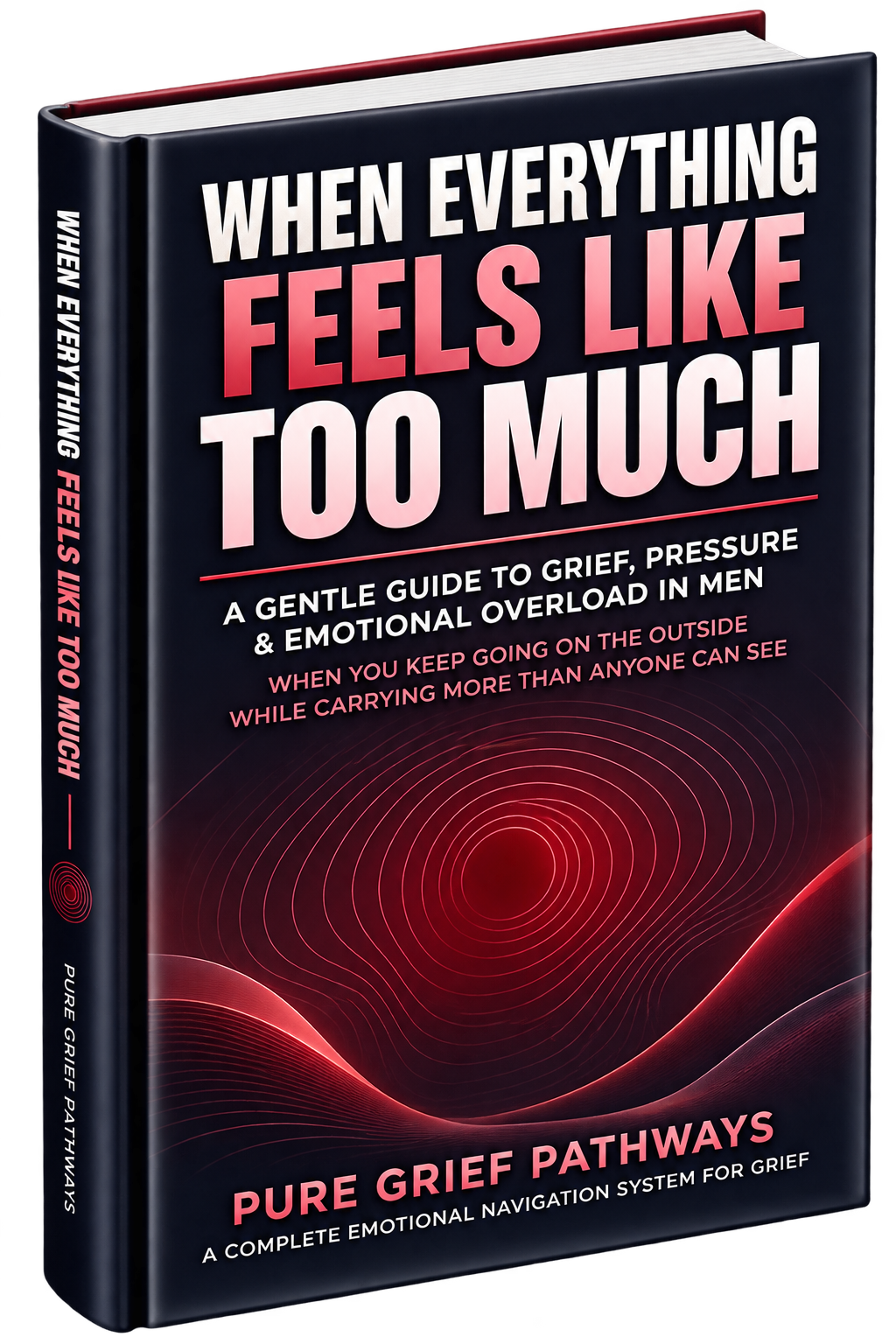
But underneath all of that, you may be exhausted, irritable, restless, unable to switch off, withdrawing from people — or simply feeling as though everything has become too much. When Everything Feels Like Too Much is a gentle guide to grief, pressure and emotional overload in men.
You May Be Carrying More Than Anyone Realises.
Not every grieving man looks visibly devastated.
You may still go to work. Answer messages. Deal with paperwork. Fix things. Help your family. Sort out practical problems. Pay the bills and make decisions.
From the outside, it may even appear that you are coping remarkably well.
But inside, something may feel very different.
You may be exhausted. Less patient. Unable to concentrate. More irritable. Restless. Numb. Unable to switch off. You may be withdrawing from people without really knowing why.
Grief does not have to look emotional to be emotional.
Sometimes grief appears through behaviour, tension, exhaustion, withdrawal, anger or an overwhelming need to keep busy.
This guide is about recognising what may be happening underneath the surface — without telling you how a man is supposed to grieve.
Looking Capable And Feeling Okay Are Not The Same Thing.
You can be functioning extremely well while carrying an enormous amount of grief.
You keep working because work gives you something practical to focus on.
You become the person everybody else relies upon while saying very little about yourself.
You feel more irritable, frustrated or impatient than you used to.
You keep yourself constantly occupied because stopping feels more difficult.
You withdraw, become quieter or find yourself wanting to be alone.
You appear to be managing while internally feeling as though the pressure is building.
Seven Ways To Understand And Reduce The Pressure You May Be Carrying.
This isn't about forcing you to talk, telling you that you should cry, or deciding what grief should look like. It is about helping you recognise your own signals and giving what you are carrying somewhere to go.
Recognise Your Version Of Grief
Your grief doesn't need to look like anybody else's. Begin by noticing how grief is actually showing up in you.
Notice What You Are Carrying
Sometimes the thing that triggers you is simply the final addition to pressure that has already been building.
Create A Release Valve
Talking is only one option. Walking, writing, movement, music, reflection and private expression can also create space.
Distraction Or Avoidance?
Taking a break from grief can help. But constantly needing to escape every encounter with grief can become exhausting.
Look Under The Anger
Anger may sometimes be carrying sadness, fear, guilt, helplessness, loneliness or exhaustion underneath it.
Let Somebody Know
You don't need to tell everyone everything. Sometimes one honest conversation with one person is enough.
Watch How You Numb The Pressure
Ask whether a coping strategy is genuinely helping you carry the grief — or quietly creating another problem.
Strength Does Not Require Emotional Invisibility.
You can be strong and struggling. Capable and grieving. Reliable and tired.
Those things can exist together.
You don't have to tell everybody everything. You don't need the perfect words. And you don't need to cry in order to prove how much somebody mattered.
You do not have to collapse before you are entitled to support.A Practical Guide For The Days When The Pressure Feels Too Heavy.
Return to this resource whenever you notice yourself holding more in, becoming increasingly irritable, withdrawing, keeping constantly busy or simply feeling as though you cannot deal with one more thing.
You Don't Have To Wait Until Everything Becomes Unbearable.
You don't have to release everything at once. You don't have to explain everything. And you don't have to reach breaking point before giving some of what you are carrying somewhere to go.
Download When Everything Feels Like Too Much Free PDF • No registration required • Yours to keepExplore The Pressure Release Protocol.
This free guide introduces some of the supportive principles behind The Pressure Release Protocol, part of the Pure Grief Pathways support library.
The complete program is designed particularly around the experience of grief that becomes internalised, contained and carried as pressure.
It recognises that grief doesn't always appear as visible sadness. Sometimes it appears as irritability, restlessness, withdrawal, overwork, numbness, physical tension, exhaustion or the constant feeling that you simply need to keep going.
The Pressure Release Protocol isn't about forcing men to talk about feelings in a particular way. It isn't about telling you that you should cry. And it isn't about defining one correct way for a man to grieve.
Instead, it provides a structured pathway for recognising how grief is showing up in your life, understanding where emotional pressure may be accumulating and identifying healthier ways of giving some of that pressure somewhere to go.
There is absolutely no requirement to continue. This free guide is yours whether you choose to explore anything further or not.
Explore The Pressure Release ProtocolSometimes Strength Is Not Carrying More. Sometimes Strength Is Finally Putting Something Down.
There can be a particular kind of loneliness in being the person everybody assumes is coping.
Perhaps you have become very good at appearing okay. Perhaps you are still functioning, working, helping other people and doing everything that needs to be done.
That does not mean the grief isn't there.
You may have normal conversations. Laugh. Work. Watch television. Eat a meal. Have an ordinary day.
Then a song, a photograph, an empty chair, a familiar road or a date on the calendar brings the pressure back.
That does not mean you have gone backwards. It means somebody mattered.
Strength may sometimes mean recognising when you are carrying too much. It may mean saying that today is difficult. Taking an hour away from responsibility. Calling somebody. Going for a walk. Or simply admitting that you miss them more than you have been allowing yourself to say.
Pure Grief Pathways
A Complete Emotional Navigation System for Grief